Understand
Explore thoughts, emotions, relationships and patterns that may be affecting how life feels now.
Integrative counselling for people who may be feeling overwhelmed, stuck, misunderstood or disconnected. We can talk in a room, over the telephone, or side by side on a walk outdoors — whatever helps you feel most at ease.
Joshua Moorby · BACP Registered Member (MBACP) · Huddersfield HD8, West Yorkshire

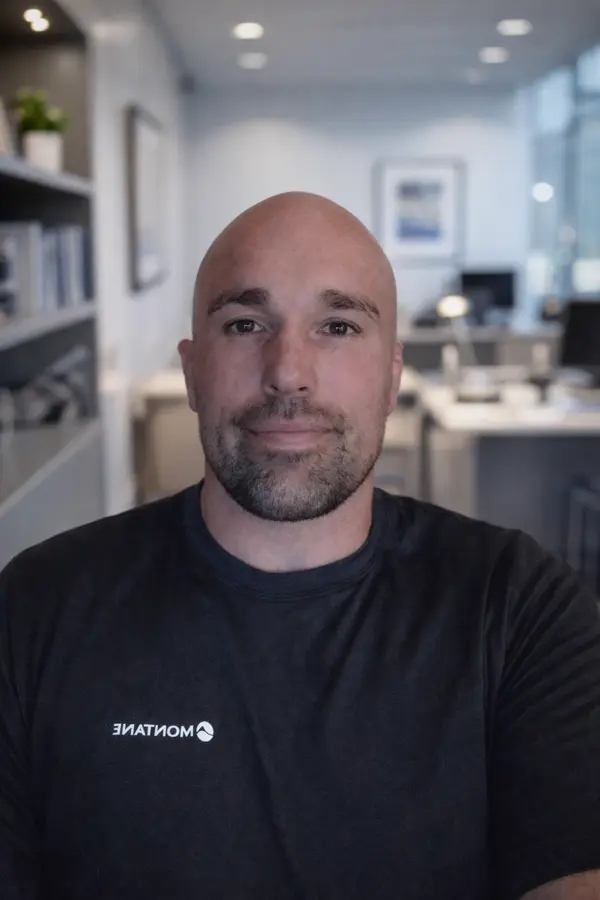
I'm an integrative counsellor and a registered member of the British Association for Counselling and Psychotherapy (BACP), working in and around the HD8 area of Huddersfield.
I try to be warm, honest and collaborative. Counselling with me isn't about being told how to live — it's about having the time and space to understand what is going on for you, and to think together about what might help. I have a particular interest in neurodiversity, and in working with people who have found that more conventional settings haven't quite fitted.
My training, the approaches I draw on, fees and availability are all listed on my BACP profile.
You don't need to arrive knowing exactly what is wrong or what you want to change. Counselling can offer a steady, confidential space to slow things down and explore what is happening in your life, at a pace that feels manageable.
Working integratively means I bring together different therapeutic ideas according to what you need, rather than expecting you to fit one fixed model.
Explore thoughts, emotions, relationships and patterns that may be affecting how life feels now.
Use conversation and, if it suits you, creative or outdoor approaches to reach what is difficult to put into words.
Develop greater self-understanding, emotional steadiness, self-trust and a clearer sense of direction.
Words are only one way of making sense of experience. Sometimes it helps to make something, to move, or simply to be somewhere with more space around you. These are offered as options, never requirements — plenty of people prefer to just talk, and that is completely fine.
Creative approaches
Drawing, image-making, writing or working with objects can help give shape to feelings
that are hard to explain. No artistic ability is needed — it's about expression, not
the end result.
Walk-and-talk counselling
Walking side by side can make conversation feel more natural. There's less pressure to
hold eye contact, silences often feel easier, and moving can help thoughts settle.
Time in nature
Being outdoors, in the countryside around HD8, can create a different kind of space to
think and talk — and noticing the seasons, the landscape and our own responses to them
can become part of the work.
Face-to-face and telephone
Indoor sessions and telephone counselling are also available, if travelling or being
outdoors isn't right for you.
We'll talk about any approach first, and only use it if it feels right for you. You can change your mind at any point.
This way of working can be a particularly good fit if you:
People also come to counselling for many other reasons, including:
Sessions can be short-term, long-term or time-limited — whatever we agree feels right.
If something here feels familiar, you're welcome to get in touch. There's no commitment involved — the first step is simply a chance to see whether working together feels right.
This website deliberately does not publish a personal telephone number or email address. The BACP contact form provides a more appropriate route for an initial enquiry. Please avoid putting highly sensitive personal information into an ordinary email or website form.
If you'd prefer another way of keeping in contact, we can arrange that after your first message.
You can simply say that you're thinking about counselling and would like to talk about whether it might be suitable. There's no need to explain everything in your first message.
Counselling is not a crisis or emergency service. If you are in immediate danger or need urgent mental-health support, contact emergency services on 999, NHS 111 (choose the mental health option), or Samaritans on 116 123, free at any time of day or night.